
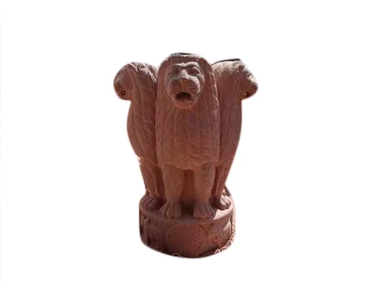
The "Ashok Stambh" or "Ashoka Pillar" is a prominent symbol in Indian culture and history, named after the Mauryan Emperor Ashoka (reigned circa 268-232 BCE). However, the term "Red Stone Ashok Stambh" might refer to a specific type of Ashoka Pillar made from red stone. Let's explore this further: Ashoka Pillar: The Ashoka Pillars were erected by Emperor Ashoka during his reign across the Indian subcontinent. These pillars served as markers for important sites, as well as inscriptions of Ashoka's edicts, which conveyed his principles of dharma (moral law), religious tolerance, and governance. The most famous of these pillars is the one erected at Sarnath, near Varanasi, which is crowned with four lions standing back to back and is now the emblem of India. Red Stone Ashok Stambh: While the original Ashoka Pillars were primarily made of sandstone, the term "Red Stone Ashok Stambh" might refer to a replica or a modern interpretation of the Ashoka Pillar made from red-colored stone. This could be a decorative piece, a commemorative monument, or an artistic representation inspired by the historical significance of the Ashoka Pillars.