
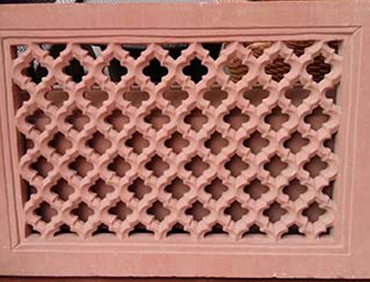
A "stone jali" refers to a type of intricate stone screen or lattice work commonly found in Indian architecture. The word "jali" itself means "net" or "mesh" in Hindi, Urdu, and other Indian languages. Stone jalis are architectural elements that serve multiple purposes, including providing ventilation, filtering light, enhancing privacy, and adding decorative beauty to buildings. Here are some key characteristics and uses of stone jalis: Material: Stone jalis are typically crafted from various types of stone, including marble, sandstone, and granite. These stones are chosen for their durability and ability to be intricately carved. Design: Stone jalis feature elaborate geometric, floral, or abstract patterns meticulously carved into the stone. These designs can range from simple repetitive motifs to highly intricate compositions. The patterns allow light and air to pass through while creating captivating visual effects. Functionality: Stone jalis serve practical purposes in architecture. They are often used in windows, balconies, and screens to provide ventilation and maintain privacy while allowing natural light to filter through. In hot climates, they help to cool interior spaces by allowing airflow. Decorative Element: Beyond their functional role, stone jalis are valued for their aesthetic appeal. They are frequently incorporated into the facades of temples, palaces, mosques, forts, and other historic buildings in India. The intricate carvings and play of light and shadow add richness and elegance to architectural designs. Symbolism: In addition to their practical and aesthetic functions, stone jalis may carry symbolic meanings in certain contexts. For example, in Islamic architecture, jalis are sometimes seen as representing the veil between the sacred and the profane, allowing light to filter into sacred spaces while maintaining privacy. Stone jalis are an integral part of Indian architectural heritage, reflecting centuries of craftsmanship and cultural traditions. Today, they continue to inspire contemporary architects and designers, both in India and around the world, as symbols of beauty, ingenuity, and cultural identity.