
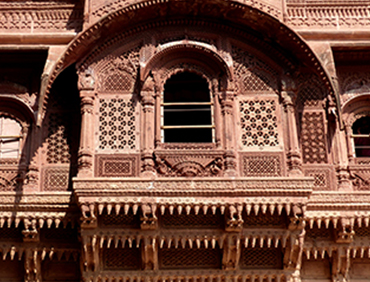
Jharokha: In Indian architecture, a jharokha is a type of overhanging or enclosed balcony, often with intricately carved stone or wooden lattice work. Jharokhas are commonly found in traditional Rajasthani architecture, particularly in palaces, forts, and havelis (traditional mansions). They were used as viewing platforms, allowing residents to observe processions, events, or daily life in the streets below while remaining indoors. Red Stone: The term "Red Stone" could refer to a specific type of stone used in the construction or decoration of the jharokha. India is known for its rich variety of natural stones, including sandstone, which often exhibits red or reddish-brown hues. Red sandstone has been extensively used in Indian architecture for centuries, particularly during the Mughal and Rajput periods. It is prized for its durability, ease of carving, and warm color tones. A "Red Stone Jharokha" could therefore describe a jharokha crafted from red sandstone or another reddish-colored stone, featuring intricate carvings and architectural details typical of Indian craftsmanship. Such a piece might be used as a decorative element in contemporary architecture, as part of a historical restoration project, or as a standalone art piece celebrating traditional Indian design and craftsmanship.